
.png)
Most of the time, you spend hours perfecting a post that ends up getting 10 likes.
Look at your own LinkedIn analytics from last year. There's a good chance 20% of your posts, maybe less, drove 80% of your results.
I've watched this exact pattern for 12 years now (I started in social media at 17!). That gap between effort and impact is why you lose motivation after 2 weeks of posting, or start feeling like your content isn't working and it's a waste of time.
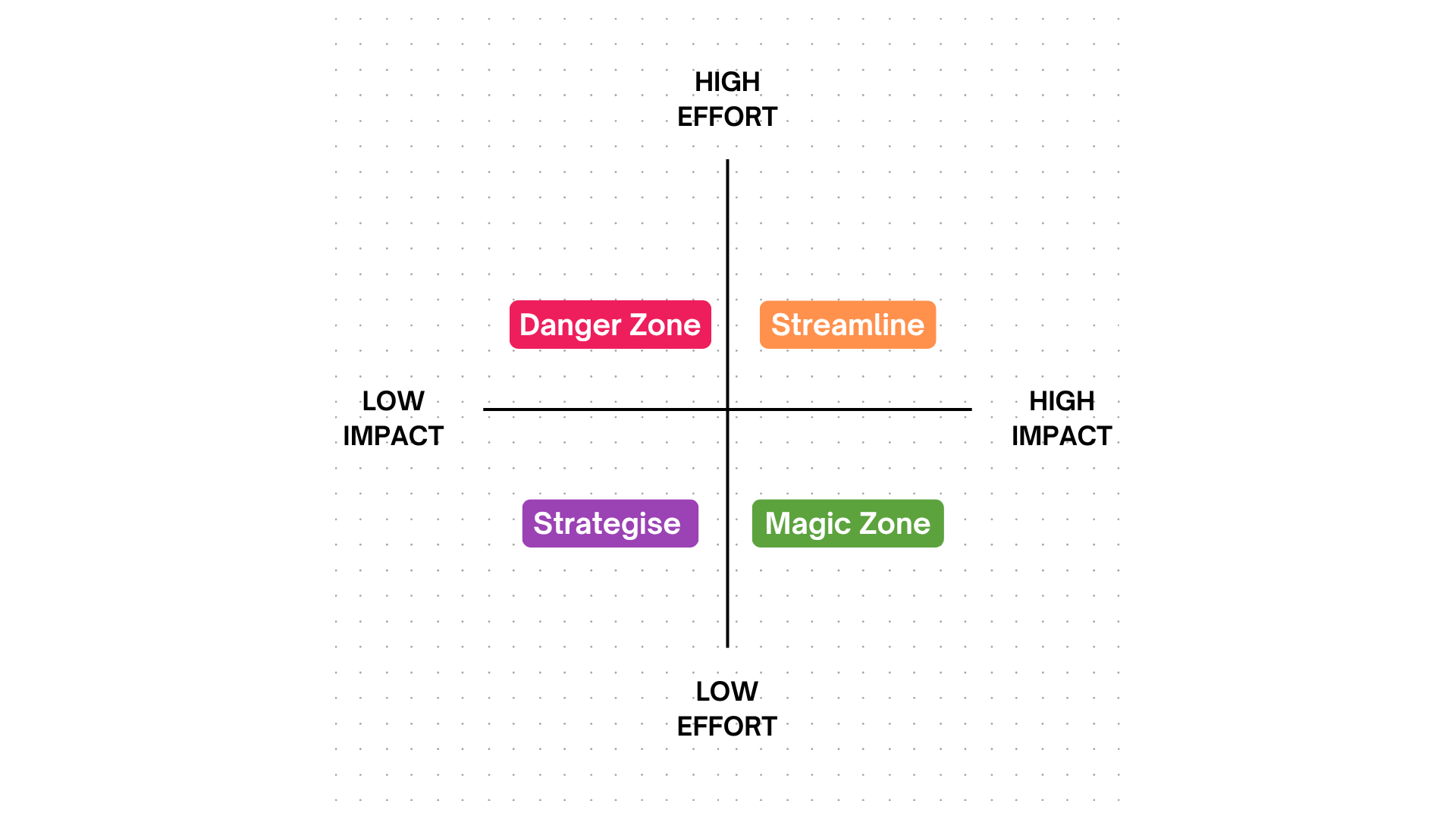
That's exactly what the Effort/Impact Matrix helps us solve at Amplify.


Key Takeaways
It's a simple tool for looking at your content in 2 ways.
How much effort it takes and how much impact it actually has.
Effort is the time, energy, and skill required to make something. Impact is the result; whether that effort actually gets you replies, DMs, or new clients. Plot any piece of content against both, and it lands in one of 4 zones.
This matrix helps you to stop treating every post as equally worthwhile and forces you to be honest about what's working (and what isn’t).
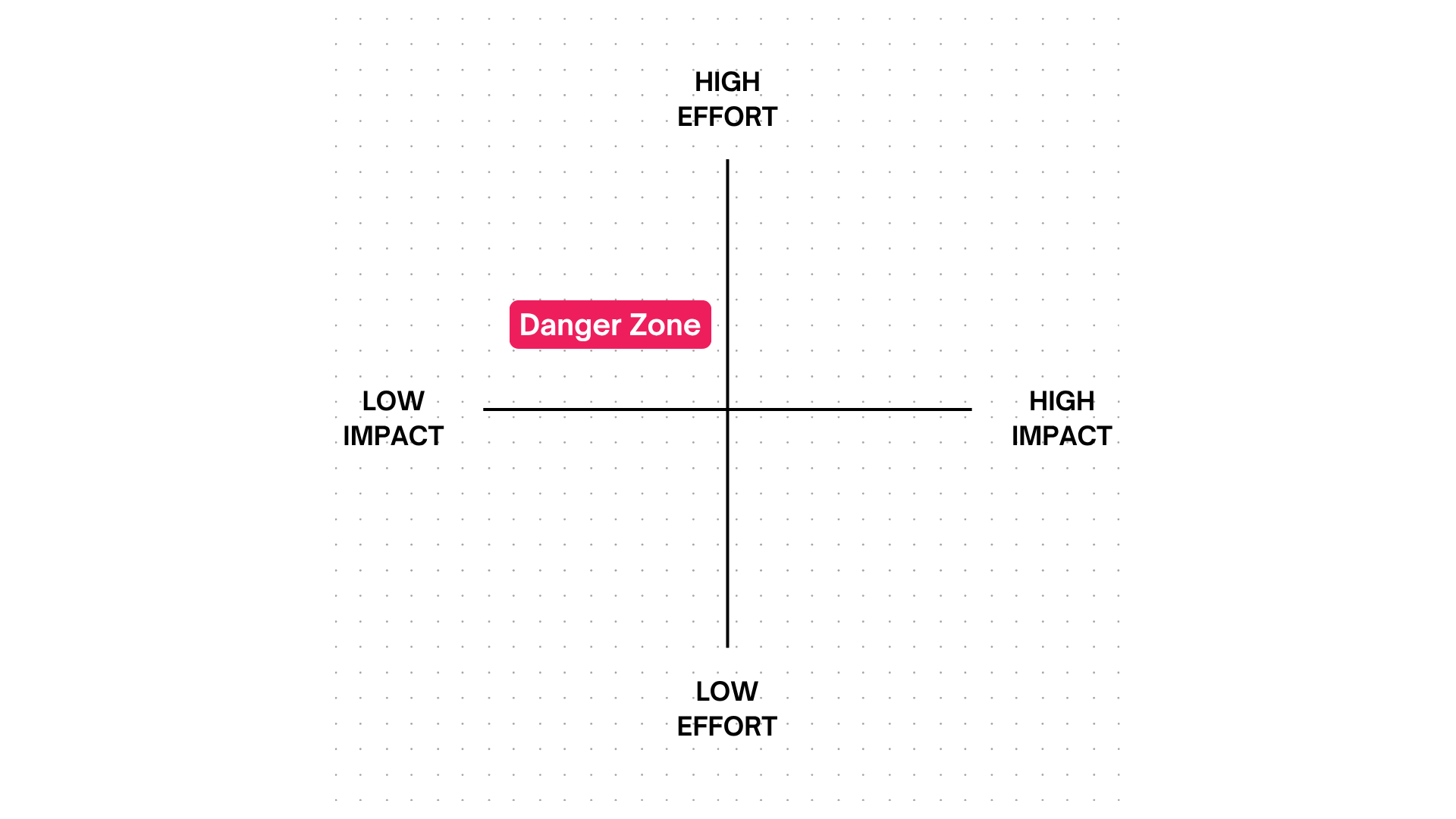
This is no man's land.

You're pouring hours into content that isn't landing.
If your content process is inefficient right now, scaling it just scales the inefficiency. More hours, more cost, same weak return.
A fast way to check if you're here: have you changed anything about your content in the last 3 to 6 months? If not, your reach is probably already sliding, even if you haven't looked closely enough to notice.
2 signs show up consistently:
If any of these sound familiar, adding more content won't fix it. Changing the process behind what gets made will.
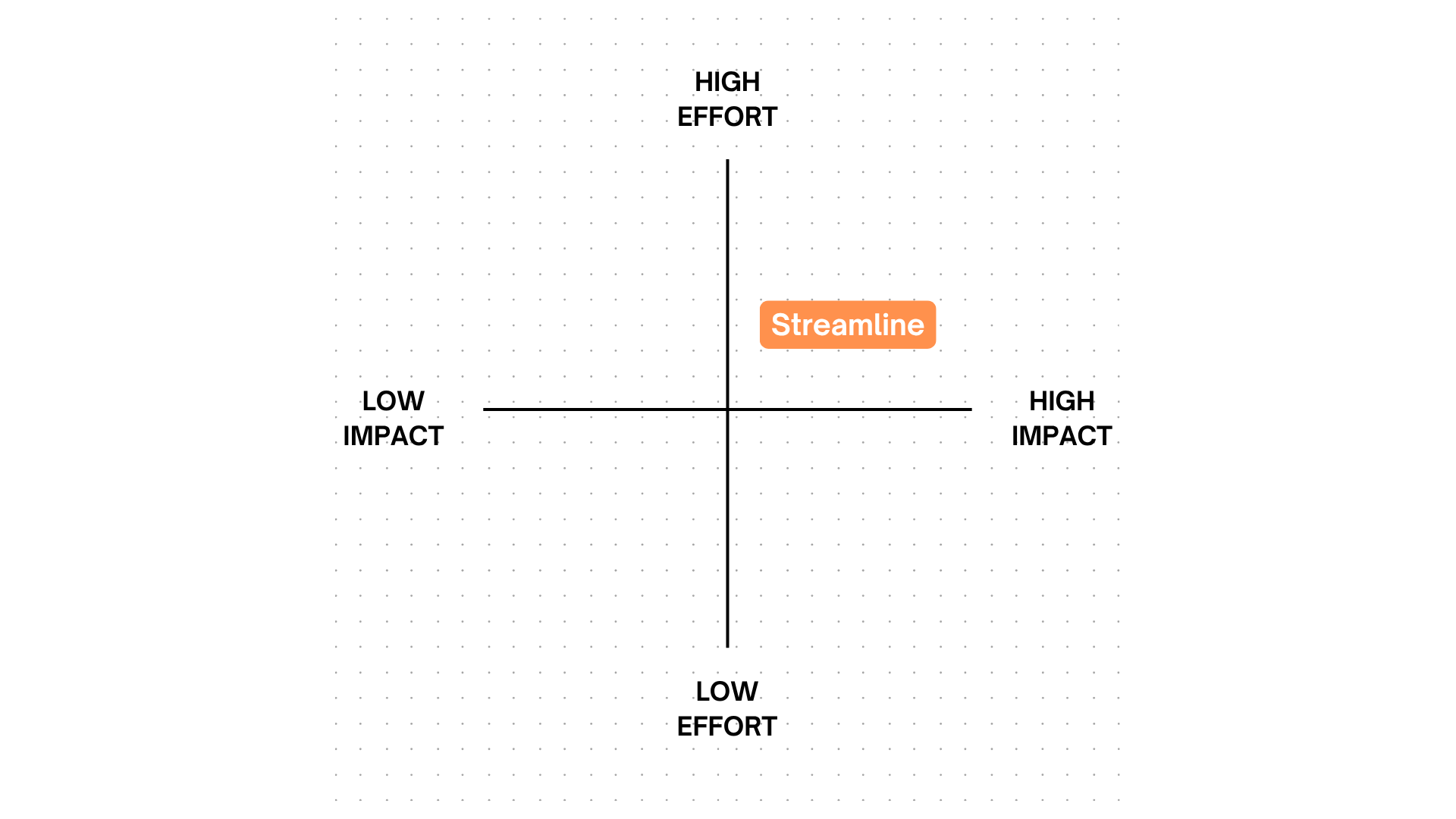
You're putting in the work and it's paying off. That's a strong stage to be in.
But if you're spending hours creating content, you have less time for your business, your clients, and the work you're actually best at.
The problem is longevity. Nobody sustains high effort forever. The move here is to find what can be trimmed, templated, or delegated, so the same results take less out of you over time.
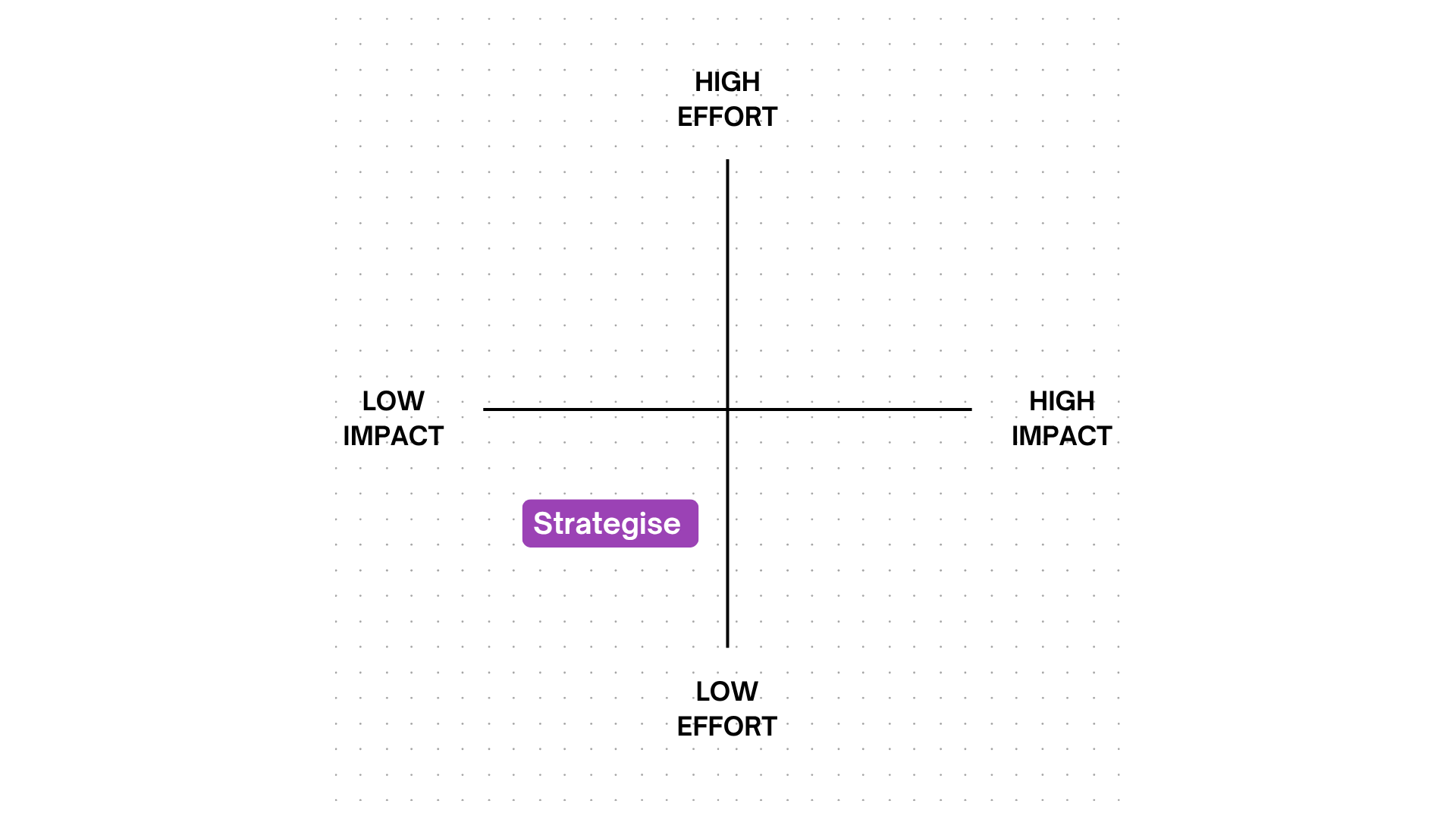
There's no system behind what you’re publishing, so nothing compounds.
9/10 people can post daily for a week, then vanish for 3. That's usually what's happening in this zone. It convinces people content "doesn't work" for their brand, when the real issue is there was never a strategy behind it.
If you're stuck here, our free 5-day Personal Brand training shows you how to nail your positioning and build a strategy around it.
I say this to my team so often it's probably going on my gravestone: ✨ THE MAGIC ZONE ✨
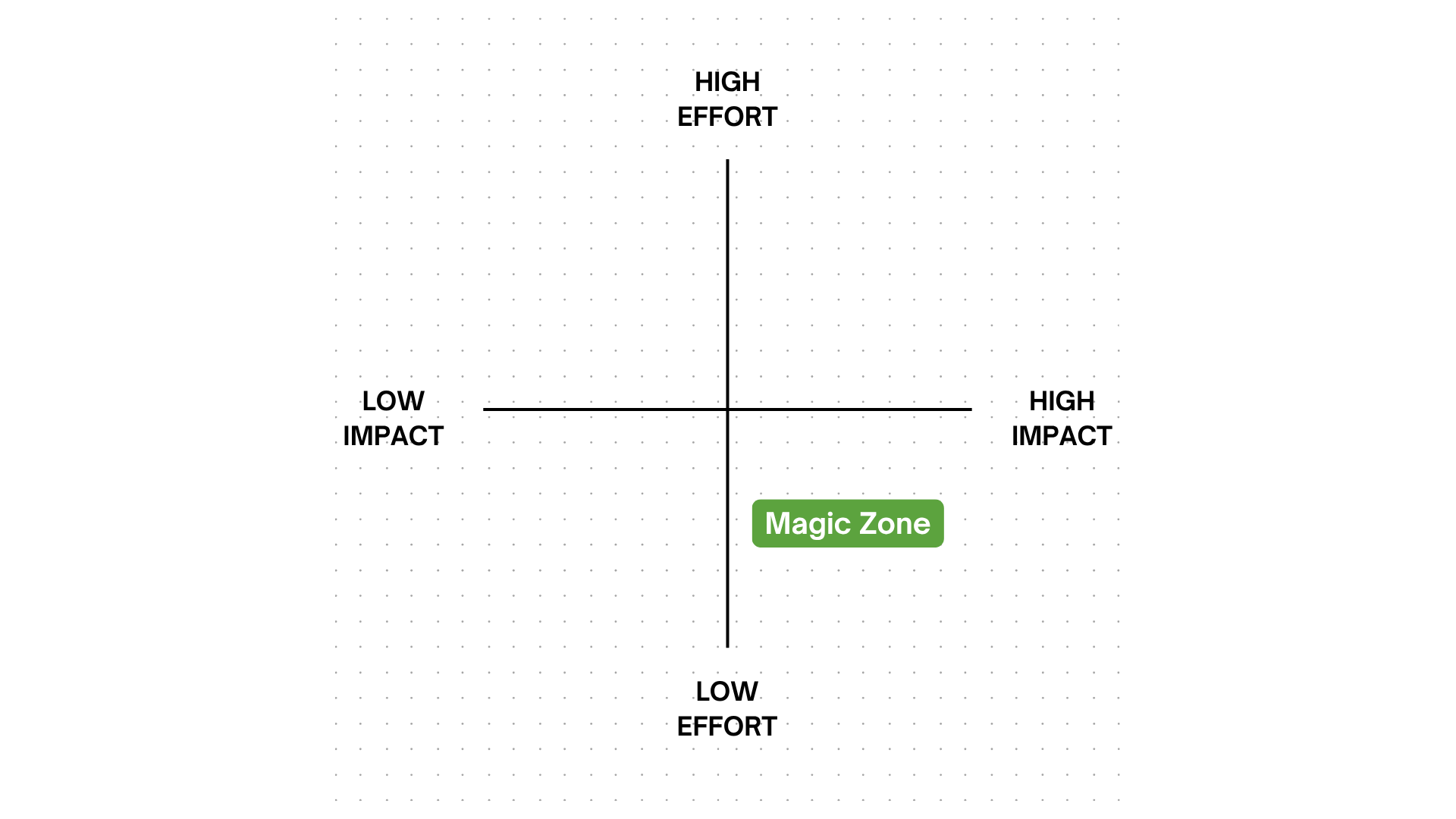
You know what your audience wants. You can produce content consistently. And you have enough data to know what tends to work, so you're building on what you've learned instead of starting from scratch every time.
Getting here has nothing to do with luck. It comes from experimenting enough to understand your audience and learn what works for them.
3 shifts tend to move you out of high effort and into the magic zone.
Nobody needs to invent content from scratch. If a topic, format, or hook has already proven it works, that's a stronger starting point than a blank page.
Start by looking at 5–10 people who consistently create content in your industry. Look at their top-performing posts from the last few months and note which hooks, formats, and topics perform best. Then bring your own experience or opinion to those ideas.
There are no unique topics left online, only unique messengers.
For one person, writing is fast and natural. For someone else, it's talking in front of a camera, or thinking out loud on a call. There's no one low-effort format that works for everyone.
The fastest way to reduce effort is figuring out which format is native to how you actually think, then building your content process around that.
For example, I'm most creative in meetings, so we record almost every one in my business now. That means we've got transcripts full of random ideas sitting there waiting to become posts.
The same task can take 4 times as long depending on when you attempt it. A newsletter that takes 4 hours on a tired Sunday night might take 40 minutes on a fresh Saturday morning.
Once you know your own energy pattern, batching stops being about discipline. It becomes about timing. Do more of the work when it comes more naturally to you, so the output doesn't depend on forcing it every day.

None of this needs more hours or a bigger budget. It needs knowing which zone your content currently is in, and being honest enough to change your process once you know.
If you're actually going to do the work, I see you 👋. DM me on LinkedIn, I want to hear what zone you're in.

No. Black Friday is the only time we discount the January cohort. Outside this window, seats return to full price.
Match your content format to what's genuinely low effort for you, and create during the times you're naturally most capable, rather than forcing a fixed schedule.
Effort and impact aren't correlated. A well-produced post can miss because the idea itself is weak, while a 5-minute post built on a sharp idea can outperform it easily.
When you join the cohort, you’ll be added to Circle - our private community platform. From that date, you’ll enjoy 12 months of membership, giving you access to all community events and resources. It’s also where you’ll connect with your cohort throughout the 5 weeks and beyond.
A framework that sorts content into 4 zones based on effort and impact: the danger zone (high effort, low impact), a sustainable-but-demanding zone (high effort, high impact), filler content (low effort, low impact), and the magic zone (low effort, high impact).
There's no fixed number that works for everyone. The better question is whether the hours you're already spending are going toward the magic zone, or the danger zone.
Whichever format is genuinely lowest effort for how you personally think and communicate. Forcing a format because it's trending usually produces high-effort, low-impact content.
That’s actually the best time to start. Personal Brand Mastery is designed to help beginners avoid years of trial and error. You’ll learn how to find your positioning, craft content that resonates, and build momentum from zero. Many of our students started with no following at all and quickly built an engaged audience by applying the system.
We’d love to help. You can reach us at support@amplifyacademy.com. We’ll get back to you within 48 hours.
